3D Pyramind: A Creative Framework for Clarity
Imagine a tool that helps you structure ideas—not just list them, but layer them with intention, hierarchy, and spatial logic. That’s what 3D Pyramind offers: a visual and conceptual framework where ideas stack, relate, and scale across three dimensions—foundation, progression, and integration. It’s not software or a template. It’s a thinking system—designed to clarify complexity without oversimplifying it.
What Makes 3D Pyramind Different?
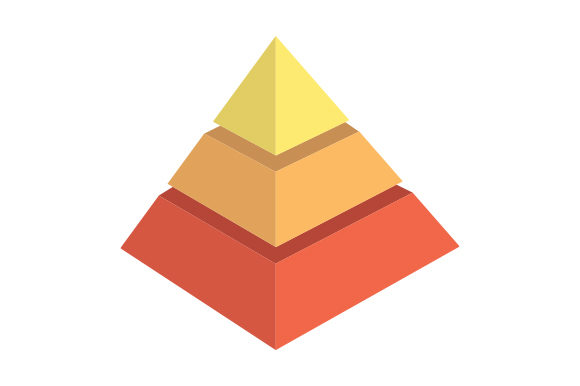
Most idea frameworks are flat: mind maps sprawl outward, bullet lists scroll downward, and SWOT charts box thinking into quadrants. 3D Pyramind introduces depth. Its core shape—a pyramid—represents how strong ideas are built: broad at the base (principles, audience needs, raw materials), narrowing through layers of refinement (strategy, execution, feedback), and culminating in a focused, actionable outcome (a product, campaign, lesson plan, or prototype).
What sets it apart is its adaptability. Unlike rigid models, 3D Pyramind doesn’t prescribe content—it invites your context. A teacher might use the base layer for learning objectives, the middle for activity sequencing, and the apex for measurable outcomes. A freelance designer could anchor the base in client goals, layer in user research and visual direction, and land on a single, high-impact deliverable.
Creative Applications Across Roles
3D Pyramind thrives where clarity meets creativity—and that’s nearly everywhere you work with ideas.
- Bloggers & Content Creators: Use the base for audience questions or search intent, the middle for supporting angles (data, stories, comparisons), and the apex for the unique insight or takeaway. This keeps long-form posts tight, layered, and scannable—without sacrificing depth.
- Small Business Owners: Map your value proposition at the apex. Work backward: middle layers hold differentiators (service speed, local expertise, sustainability practices); the base holds customer pain points and market gaps. It surfaces what’s truly essential—not just what’s easy to say.
- Educators & Trainers: Build curriculum units this way. Base = foundational knowledge or skills; middle = application exercises, case studies, peer feedback loops; apex = a capstone task that synthesizes everything. Students see how pieces connect—and why each layer matters.
- Marketers & Campaign Planners: Anchor the base in platform behavior (e.g., “Instagram users scroll fast, value authenticity”) rather than demographics. Layer in creative assets, messaging tone, and timing logic. End at the apex with one clear conversion action—not “more engagement,” but “book a demo from this carousel.”
How to Start—Without Overdesigning
You don’t need 3D modeling software or design skills. Begin with pen and paper—or a simple slide or whiteboard layout. Sketch the pyramid in three horizontal bands. Label each band with your current focus: “Why,” “How,” and “What”—or “Input,” “Process,” “Output.” Then populate each layer with no more than 3–5 concrete items.
Here’s a realistic example: A hobbyist launching a print-on-demand shop uses 3D Pyramind like this:
- Base: Niche audience interests (e.g., “vintage botany lovers,” “minimalist hikers,” “cat owners who read poetry”)
- Middle: Design constraints and workflows (e.g., “only vector art,” “prints must pass color-accuracy check,” “mockups shown on two real products max”)
- Apex: One signature launch piece—like a limited-run poster series with embedded QR codes linking to care tips and origin stories
This keeps the project scoped, audience-grounded, and production-ready. No vague “build a brand”—just clear, sequenced decisions.
Variations That Keep It Useful
3D Pyramind isn’t static. Shift its orientation based on your goal:
- Inverted Pyramid: Flip it when communicating. Start at the apex (the key message or result), then support downward. Ideal for pitches, email subject lines, or social hooks—where attention is narrow and time is short.
- Modular Pyramid: Treat each layer as a reusable block. A marketer might keep their “audience insight” base layer consistent across campaigns, swapping only middle-layer tactics and apex goals. This builds consistency without repetition.
- Collaborative Pyramid: Assign layers to team roles. Researchers own the base, designers shape the middle, and stakeholders align on the apex. It clarifies contribution—and surfaces misalignment early (e.g., if the apex assumes features the base hasn’t validated).
Staying Clear, Consistent, and Audience-Focused
The risk with any framework is abstraction—turning it into jargon instead of a working tool. To avoid that with 3D Pyramind:
- Name layers with verbs, not nouns. Instead of “Strategy,” try “Decide What to Prioritize.” Language should signal action—not just label.
- Test each layer against a real person. Would your target reader, client, or student recognize themselves in the base? Does the middle layer reflect how they actually behave—not how you wish they would?
- Limit items per layer—and revisit them weekly. If a layer holds more than five items, something’s unrefined. Ask: Which two are non-negotiable? Which three can be merged, deferred, or dropped?
- Use contrast, not decoration. In digital versions, differentiate layers with subtle spacing, font weight, or background tone—not icons or gradients. Clarity comes from structure, not styling.
Why It Endures Beyond Trends
3D Pyramind works because it mirrors how people learn, decide, and act: they need grounding first, then guidance, then a clear next step. Algorithms change. Platforms shift. But that cognitive sequence remains stable. That’s why educators use it alongside new edtech tools—and why founders apply it before writing a single line of code.
It also resists trend-chasing. You won’t find “3D Pyramind influencer templates” or viral challenges built on it—because its power lies in quiet utility, not spectacle. It supports originality by forcing specificity: you can’t fill a pyramid layer with buzzwords. You need substance that fits the shape.
Whether you’re outlining a workshop, planning a product launch, drafting a grant proposal, or sketching a personal project, 3D Pyramind gives you permission to build deliberately—not just produce quickly. It doesn’t promise inspiration on demand. It offers something more reliable: a way to make your thinking visible, testable, and shared with purpose.