Floating Hangtag Mockup: A Strategic Tool for Modern Brand Presentation
In today’s visually saturated marketplace, first impressions are no longer formed at the point of sale alone—they begin online, in social feeds, on e-commerce listings, and across digital touchpoints. Amid this shift, the Floating Hangtag Mockup has emerged not as a passing design trend, but as a purpose-built solution responding to evolving expectations around authenticity, precision, and experiential clarity. It is more than a visual placeholder; it’s a bridge between conceptual branding and tangible consumer perception.
What Is a Floating Hangtag Mockup—Really?
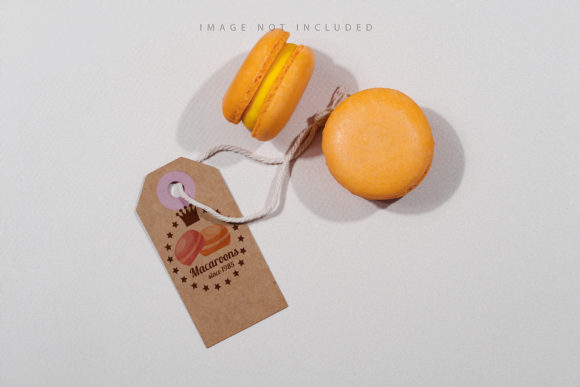
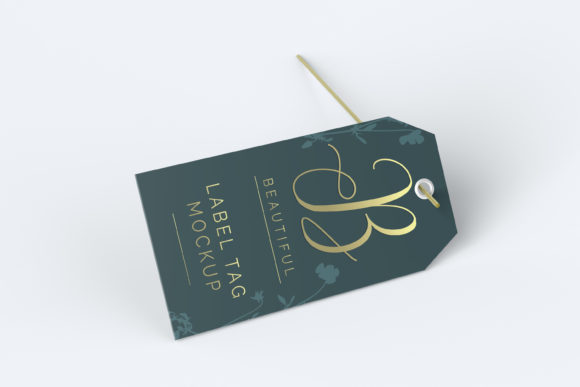
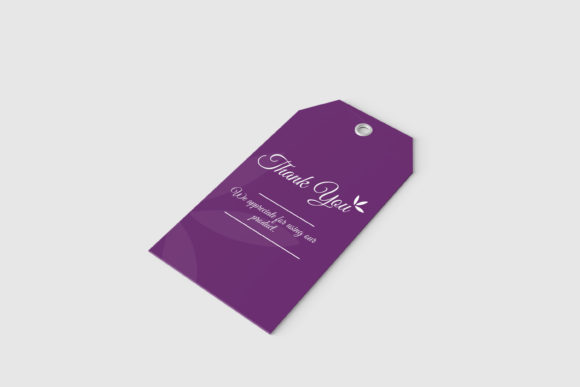
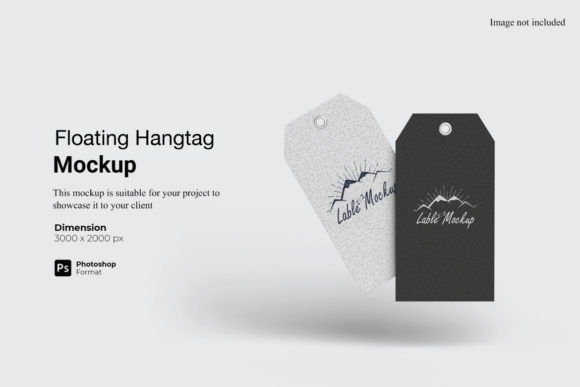
A Floating Hangtag Mockup is a high-fidelity digital template that renders a product hangtag suspended in three-dimensional space—free from background clutter, shadows anchored to surfaces, or artificial staging. Unlike traditional mockups that embed tags onto garments, packaging, or retail displays, floating variants isolate the tag itself, presenting it mid-air with realistic lighting, subtle depth, material texture (e.g., kraft paper, recycled cardstock, or soft-touch laminate), and natural shadow diffusion.
This isn’t about visual flair for its own sake. The “floating” quality serves a functional imperative: it allows designers, marketers, and product teams to evaluate typography legibility, color contrast, icon placement, and structural balance *in context*—without the visual noise of competing elements. When a sustainability claim or QR code appears on a tag, how readable is it at thumbnail size? Does foil stamping catch light authentically under varying screen conditions? A Floating Hangtag Mockup answers those questions before physical production begins.
Why It Fits Seamlessly Into Today’s Creative and Commercial Realities
The rise of the Floating Hangtag Mockup reflects deeper currents reshaping creative workflows and brand strategy:
- Remote collaboration acceleration: With distributed teams managing global launches—from Berlin-based designers to Manila-based print vendors—the need for consistent, shareable, and instantly interpretable assets has never been greater. A Floating Hangtag Mockup delivers a single source of truth that communicates intent without requiring translation, annotation, or revision cycles.
- E-commerce optimization pressure: Online shoppers now expect photorealistic, zoomable, and contextually grounded product imagery. Platforms like Shopify, Amazon, and Etsy reward listings where supporting visuals reinforce trust signals—like certifications, origin stories, or care instructions. A Floating Hangtag Mockup enables brands to showcase these details crisply, even before inventory arrives.
- Sustainability accountability: Consumers increasingly scrutinize materials and manufacturing ethics—not just what’s *on* the tag, but *what the tag is made of*. Designers use Floating Hangtag Mockups to prototype biodegradable substrates, soy-based inks, or minimalist layouts that reduce paper use—all while preserving visual impact. The mockup becomes a testing ground for responsible innovation.
- Agile branding iteration: In fast-moving categories—from indie beauty to direct-to-consumer apparel—brands often refine messaging seasonally or even weekly. Updating a Floating Hangtag Mockup takes minutes; reordering physical proofs takes days and adds cost. This agility supports real-time responsiveness without compromising presentation quality.
Changing Needs Driving Adoption
Three interlocking shifts make the Floating Hangtag Mockup not just useful—but necessary:
1. From Static to Context-Aware Visuals
Brands no longer treat packaging and labeling as afterthoughts. They’re recognized as micro-interfaces—tiny yet critical moments where value propositions are confirmed or dismissed. A Floating Hangtag Mockup supports this mindset by enabling designers to simulate how a tag performs across devices (e.g., readability on a 4-inch smartphone screen versus a 27-inch desktop) and lighting environments (e.g., warm indoor lighting vs. cool daylight photography).
2. From Print-Centric to Omnichannel-Centric Production
Historically, hangtags were designed for physical retail: sized for hangers, optimized for shelf visibility, printed in bulk. Today, the same tag must function equally well as an Instagram Story highlight, a Pinterest pin, a PDF spec sheet, or part of a B2B pitch deck. The Floating Hangtag Mockup accommodates that multiplicity—it exports cleanly into web formats (SVG, PNG with transparency), print-ready PDFs, and motion-ready files for animated previews.
3. From “Good Enough” to “Trust-Validated” Imagery
Consumers are increasingly skeptical of over-styled or digitally exaggerated product visuals. They seek cues that signal honesty: visible fiber texture, unretouched paper grain, accurate color fidelity. Advanced Floating Hangtag Mockups now integrate PBR (Physically Based Rendering) materials and calibrated ICC profiles—ensuring that what’s previewed matches what’s printed, down to the tactile nuance of embossed lettering.
Practical Applications Across Roles
Different professionals leverage the Floating Hangtag Mockup in distinct, high-impact ways:
- Product Managers use it to align cross-functional stakeholders—showing supply chain leads how a revised tag layout reduces waste, or legal teams how compliance language fits within mandated margins—before committing to tooling changes.
- Freelance Designers embed Floating Hangtag Mockups directly into client presentations, turning static PDFs into immersive brand snapshots. One designer reported a 40% reduction in revision rounds after switching from flat JPEGs to interactive mockup previews hosted via Figma embeds.
- Marketing Teams deploy them in pre-launch campaigns—featuring the hangtag alongside product shots to tease storytelling elements (e.g., “Meet the maker” bios or carbon footprint metrics) long before inventory ships.
- Sustainability Officers use them to model lifecycle impacts: comparing mockups of cotton twine vs. hemp cord attachments, or evaluating how reducing tag size by 15% affects perceived premiumness—and actual consumer response via A/B tested landing pages.
Technology Enabling Precision—Without Complexity
Modern Floating Hangtag Mockups are built on accessible yet powerful foundations. Many integrate seamlessly with Figma, Adobe XD, and Photoshop, supporting smart layers, variable text fields, and dynamic color swatches. Some even link to CMS platforms or e-commerce backends—so when a brand updates its Pantone palette in Brandfolder, the change propagates automatically across all tagged mockups.
Crucially, this sophistication doesn’t demand technical expertise. Templates are structured intuitively: drag in your logo, type your copy, select your substrate, and adjust lighting angle—all with real-time preview. That usability barrier removal is key: it means a small-batch ceramicist in Portland can achieve the same visual rigor as a Fortune 500 apparel brand—leveling the field through tooling, not budget.
Looking Ahead: Integration, Not Isolation
The future of the Floating Hangtag Mockup lies not in becoming more elaborate, but more embedded. We’re seeing early adoption in AR-enabled packaging previews—where users point their phone at a blank box and see the exact hangtag rendered in situ—or in generative workflows, where AI suggests layout refinements based on readability scoring and industry benchmarks.
Yet its enduring value remains rooted in human-centered intentionality. It doesn’t replace craftsmanship—it protects it. By catching misaligned baselines, insufficient contrast ratios, or overcrowded information hierarchy early, it prevents costly reprints, delays, and brand dilution. In an era where every pixel carries strategic weight, the Floating Hangtag Mockup is less a design asset and more a discipline: a commitment to clarity, consistency, and conscientious execution.
For professionals shaping how products are understood, trusted, and chosen—whether launching a zero-waste skincare line or refreshing a heritage apparel identity—the Floating Hangtag Mockup isn’t just about showing a tag. It’s about showing up with intention, precision, and respect—for the craft, the customer, and the context in which meaning is made.