Home Fragrance Bottle Mockup: A Practical Tool for Modern Branding and Design
Whether you're launching a new soy wax candle line, developing an artisanal room spray collection, or refreshing your existing home fragrance packaging, a Home Fragrance Bottle Mockup is more than just a visual placeholder—it’s a strategic asset. It bridges the gap between concept and confidence: helping creators visualize how their label design, color palette, typography, and material choices translate onto real-world vessels before committing to physical production.
What Exactly Is a Home Fragrance Bottle Mockup?
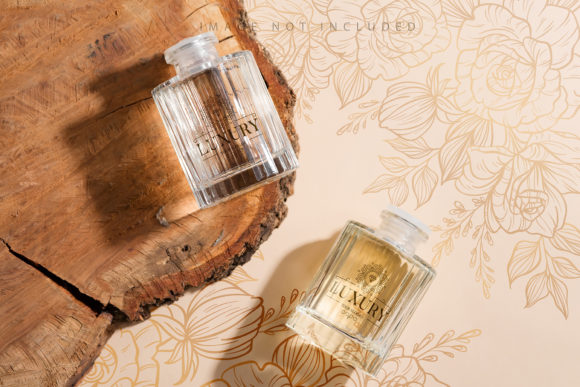
A Home Fragrance Bottle Mockup is a high-fidelity digital template—typically built in Photoshop, Figma, or compatible 3D software—that simulates how a finished label, logo, or full bottle design appears on a realistic bottle form. These aren’t generic stock images. The best versions reflect actual dimensions, curvature, lighting behavior, surface texture (matte glass, frosted amber, ribbed ceramic), and even subtle environmental context—like a shelf, linen napkin, or sunlit windowsill.
Unlike flat label templates, modern mockups account for perspective distortion, reflection, and shadow fall—so when you drop in your logo, it bends naturally around the bottle’s shoulder, fades slightly where light catches the curve, and sits convincingly within its environment. That realism matters—not just for aesthetics, but for decision-making.
Why It’s Gaining Traction Now
Three converging shifts explain the rising relevance of the Home Fragrance Bottle Mockup:
- Accelerated product development cycles: Small-batch brands no longer wait months for physical proofs. With mockups, they iterate label designs in hours—not weeks—and share refined visuals with manufacturers, retailers, or investors faster.
- Rising expectations for cohesive branding: Consumers notice consistency across Instagram posts, e-commerce thumbnails, and printed hang tags. A mockup helps ensure that same scent name, font weight, and icon scale works equally well on a 2 oz rollerball and a 10 oz reed diffuser.
- Remote collaboration becoming standard: Designers, copywriters, and founders often work across time zones. Sharing a layered PSD or Figma file with a labeled bottle mockup is clearer—and more actionable—than describing “a soft gold foil on cobalt blue” in Slack.
This isn’t about replacing physical samples. It’s about reducing waste, saving budget, and building alignment early—especially valuable for indie makers operating on lean margins and tight timelines.
How Usage Has Evolved Beyond Basic Presentation
Five years ago, mockups were mostly used for “final look” presentations—think pitch decks or Shopify homepage banners. Today, they’re embedded deeper into workflows:
- Pre-manufacturing validation: Brands send mockups to co-packers alongside spec sheets to confirm label placement height, bleed areas, and orientation—catching misalignments before plates are engraved.
- Social content planning: Instead of staging dozens of physical bottles for seasonal campaigns, creators build libraries of mockups with seasonal backgrounds (e.g., terracotta pots for summer, wool throws for winter) and swap labels instantly.
- Customer co-creation: Some subscription services let subscribers preview limited-edition scents using interactive mockups—selecting from three label variants before finalizing production runs.
- Eco-conscious iteration: When testing sustainable alternatives—like aluminum instead of glass—designers use mockups to assess how matte finishes or embossed logos render under different lighting, avoiding unnecessary sample orders.
- Educational use: Packaging design instructors assign mockup-based briefs so students learn real-world constraints—cap clearance, pump neck diameter, regulatory text sizing—without needing access to industrial equipment.
That shift—from static image to functional tool—reflects broader changes in how creative professionals validate ideas before investing in tangible outputs.
Real-World Implications Across Roles
The value of a thoughtfully chosen Home Fragrance Bottle Mockup varies by role—but the thread is consistent: reduced friction, clearer communication, and grounded decisions.
For small business owners: One founder told us she cut her label revision cycle from 11 days to under 48 hours after switching to layered mockups with smart objects. She now tests three variations per scent launch—each shared directly with her fulfillment partner for feedback on legibility at shelf height.
For freelance designers: Offering mockup integration as part of a branding package signals fluency with production realities—not just aesthetic sensibility. Clients report feeling more confident in design direction because they see how elements behave in context, not just on a white artboard.
For marketers: A/B testing email banner visuals becomes more meaningful when both variants use the same bottle mockup—ensuring differences in CTR reflect messaging or color contrast, not inconsistent bottle angles or lighting.
For educators and students: Mockups provide accessible entry points to packaging design principles. You don’t need access to a print shop to understand how ink density affects readability on amber glass—or why certain fonts fail at 6-point size on curved surfaces.
Choosing the Right Mockup: Practical Considerations
Not all mockups deliver equal utility. Here’s what to prioritize:
- Smart object compatibility: Look for files where your artwork drops in once and updates everywhere—across front, back, and cap views—without manual resizing or distortion.
- Realistic lighting options: The best include toggles for studio lighting, natural window light, or ambient glow—so you can preview how your design reads in dim bedroom lighting versus bright retail displays.
- Dimensional accuracy: Check whether the mockup matches common industry sizes (e.g., 100 mL apothecary vials, 250 mL ceramic diffusers) and includes measurement guides for regulatory text placement.
- File format flexibility: Photoshop PSDs remain standard, but Figma and Sketch-compatible versions are increasingly useful for collaborative teams without Adobe subscriptions.
- Contextual versatility: Does the background support clean e-commerce use *and* lifestyle storytelling? A mockup on a marble countertop may suit one campaign; the same bottle on a woven basket better serves another.
Avoid over-engineered mockups with 50 layers if you only need basic label placement. Simpler, well-structured files often integrate more smoothly into real workflows.
Looking Ahead: Integration, Not Isolation
The future of the Home Fragrance Bottle Mockup lies less in flashier visuals and more in smarter integration. We’re seeing early adoption of mockups that link directly to Pantone libraries for color verification, connect to CMS platforms for auto-updating product pages, or feed into AR preview tools for Shopify stores.
But the core value remains unchanged: grounding creative decisions in tangible context. As sustainability pressures grow, consumer attention spans shorten, and digital touchpoints multiply, the ability to test, refine, and align—quickly and accurately—isn’t a luxury. It’s operational hygiene.
That’s why the Home Fragrance Bottle Mockup has moved from “nice-to-have visual aid” to “essential step in the product development sequence.” It doesn’t replace craftsmanship, intuition, or market research—but it sharpens all three.
Whether you’re sketching your first scent concept on a napkin or scaling a multi-channel fragrance brand, starting with a realistic, adaptable mockup saves time, reduces risk, and keeps your vision anchored in how people will actually experience it—in hand, on shelf, and in space.