Optical Glasses and Contact Lenses Set: A Practical Choice for Flexible Vision Correction
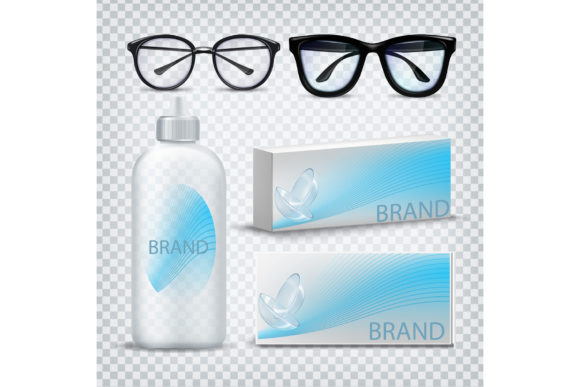
An Optical Glasses and Contact Lenses Set refers to a coordinated pair of vision correction tools — prescription eyeglasses and matching contact lenses — designed for the same refractive error (e.g., myopia, hyperopia, astigmatism) and prescribed by an eye care professional. Unlike standalone options, this set offers built-in versatility: one solution for daily wear and convenience, the other for specific activities, comfort preferences, or situational needs. It’s not a bundled product sold off-the-shelf, but rather a personalized dual-modality approach grounded in clinical assessment and lifestyle alignment.
How It Differs From Single-Modality Solutions
Choosing only glasses or only contacts means committing to one primary method of vision correction. An Optical Glasses and Contact Lenses Set shifts the focus from “either/or” to “both/and” — with intention. This isn’t about redundancy; it’s about functional complementarity. For example, someone may wear glasses during long workdays at a computer but switch to contacts for weekend hiking, swimming, or social events where frames might fog, slip, or limit peripheral awareness.
Compared to non-prescription accessories like blue-light glasses or decorative lenses, an Optical Glasses and Contact Lenses Set is medically grounded. Each component carries a verified prescription, undergoes optical calibration, and supports visual acuity and ocular health when used as directed. It also differs from “plano” (non-corrective) contact lens trials or fashion-focused eyewear — those lack therapeutic intent and do not address refractive error.
Strengths: Where the Set Adds Real Value
The core strength lies in adaptability without compromise. Glasses offer consistent, low-maintenance vision correction with minimal hygiene demands and no direct ocular contact. Contacts provide unobstructed peripheral vision, better compatibility with helmets or goggles, and aesthetic neutrality for those who prefer not to wear frames daily.
For people whose routines vary significantly — say, a teacher who presents in person (favoring glasses for ease and visibility) but travels frequently (opting for contacts on flights and hotels) — the set reduces dependency on a single tool. It also serves as a practical backup: if glasses are damaged or lost, contacts provide immediate continuity. Conversely, if eyes feel dry or irritated after extended screen time, switching to glasses gives the cornea a rest.
From a clinical standpoint, using both modalities can support long-term ocular health monitoring. Regular wear of both encourages more frequent lens handling, cleaning, and self-checks — habits that often lead to earlier detection of discomfort, redness, or changes in vision that warrant professional follow-up.
Tradeoffs and Practical Considerations
There are real tradeoffs. Managing two optical systems requires more organization: separate storage cases, cleaning solutions, replacement schedules, and insurance tracking. Contact lenses demand consistent hygiene discipline — improper handling increases risk of infection or corneal abrasion. Glasses, while lower maintenance, may be less suitable for high-motion activities or humid environments.
Cost is another factor. While some vision insurance plans cover part of both, coverage varies widely. Frames, lenses, and contact lens types (daily disposables vs. monthlies) affect out-of-pocket totals. Over a year, maintaining both can cost more than choosing one consistently — unless usage patterns justify the investment. For instance, someone who wears contacts only 2–3 days per week may find the added expense harder to justify than someone who rotates daily based on activity.
Not everyone is a candidate for both. Certain ocular conditions — severe dry eye, recurrent corneal erosion, or active blepharitis — may make contact lens wear impractical or unsafe, even temporarily. Likewise, complex prescriptions (e.g., high cylinder, multifocal designs) may translate less predictably between modalities, requiring careful fitting and adjustment.
When an Optical Glasses and Contact Lenses Set Fits Best
This approach tends to suit adults aged 20–50 whose lifestyles involve shifting contexts: hybrid workers balancing home offices and in-person meetings; fitness enthusiasts engaging in varied sports; parents managing school drop-offs, outdoor play, and evening commitments; or professionals in creative or client-facing roles where appearance and functionality both matter.
It’s also valuable during transitional phases — such as adjusting to progressive lenses (where glasses handle near/mid tasks and contacts simplify distance-only moments), or recovering from minor ocular surface issues that temporarily limit contact lens tolerance.
A realistic example: A 34-year-old graphic designer uses anti-reflective coated glasses for screen-based work but switches to toric daily disposables for weekend rock climbing. The glasses reduce digital eye strain and glare; the contacts eliminate frame interference and fogging on trails. Neither replaces the other — they each meet distinct functional needs.
When Another Option May Be More Appropriate
If your routine is highly predictable — full-time office work with minimal physical activity or environmental variation — relying solely on well-fitted glasses may be simpler, safer, and more economical. Similarly, if you’ve had repeated contact lens complications (e.g., infections, intolerance, or difficulty with insertion), prioritizing glasses — possibly with specialized lens treatments like blue-light filtering or photochromics — may better align with long-term comfort and health.
Younger adults still exploring their preferences — or older adults experiencing early presbyopia — may benefit first from trying one modality thoroughly before adding the second. Rushing into a set without assessing individual tolerance or use patterns can lead to underutilization or frustration.
Key Decision Factors to Weigh
- Consistency of environment: Do lighting, humidity, air quality, or physical demands change meaningfully across your week?
- Habitual hygiene capacity: Can you reliably manage lens cleaning, case replacement, and handwashing without shortcuts?
- Visual priorities: Is sharp central acuity most important — or do you rely heavily on peripheral awareness, depth perception, or motion clarity?
- Insurance and budget: Does your plan cover both? Are you prepared for staggered replacement cycles (e.g., new glasses every 2 years, contacts monthly)?
- Ocular health history: Have you experienced dryness, allergies, or inflammation that affects lens wear stability?
Making the Choice With Confidence
Deciding whether an Optical Glasses and Contact Lenses Set suits you isn’t about finding the “best” option — it’s about identifying the most sustainable, safe, and supportive arrangement for your eyes and life. That starts with a comprehensive eye exam and an open conversation with your optometrist or ophthalmologist. Ask about trial options, material compatibility (e.g., silicone hydrogel lenses paired with high-index glasses), and how your prescription translates across modalities.
Real-world testing matters too. Try wearing contacts for a full day of your typical routine — not just a quiet afternoon — and note fatigue, dryness, or adaptation time. Wear your new glasses during varied lighting and movement. Track what works, what doesn’t, and why. That data matters more than marketing claims or peer recommendations.
Ultimately, vision correction isn’t static. Your needs evolve with age, occupation, health, and environment. An Optical Glasses and Contact Lenses Set reflects that reality — not as a fixed endpoint, but as a flexible, clinically informed strategy that grows with you.