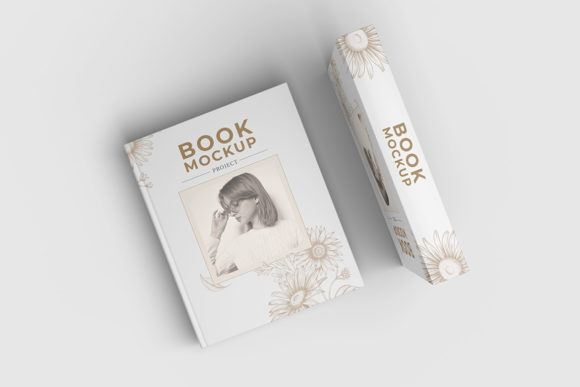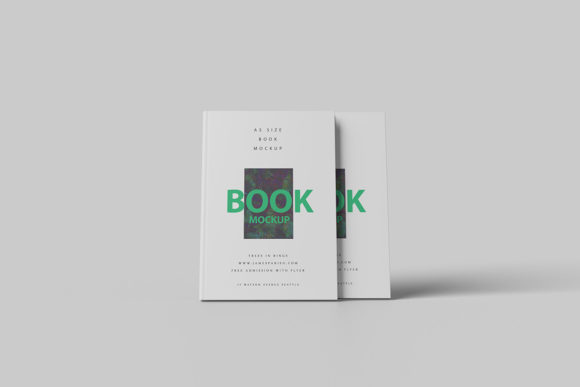
A5 Size Book Mockup
Imagine presenting your next self-published guide, client proposal, or classroom workbook—not as a flat PDF, but as a tactile, visually grounded object that feels real before it’s printed. That’s the quiet power of an A5 size book mockup: a high-fidelity digital template that places your content inside a realistic representation of an A5 (148 × 210 mm) book—complete with spine curvature, paper texture, lighting, shadows, and subtle wear. It’s not just a placeholder; it’s a communication tool that bridges design intent and audience perception.
Why A5 Fits Real Work—Not Just Theory
A5 sits in a sweet spot between portability and readability. Smaller than standard letter or A4, it’s easy to hold, carry, and flip through—yet large enough to support clear typography, detailed illustrations, and comfortable margins. This balance makes the A5 size book mockup especially valuable for creators who need to demonstrate substance without bulk: indie authors launching a poetry chapbook, UX designers showcasing a research digest, or educators distributing a concise curriculum supplement.
Unlike generic “book” mockups that default to oversized hardcovers or vague dimensions, an authentic A5 size book mockup respects real-world constraints—bleed zones, spine width calculations based on page count, and realistic cover-to-page alignment. When you drop your cover design into a properly calibrated A5 mockup, you’re not guessing whether text will get trimmed or if the spine title will stay legible—you’re verifying it.
What Sets a Strong A5 Size Book Mockup Apart
Not all mockups deliver equal value. Here’s what matters in practice:
- Smart layer organization: Layer groups for front cover, spine, back cover, and interior pages—each labeled and non-destructive—so you can update one element without disrupting others.
- Realistic material rendering: Matte vs. glossy cover finishes, visible paper grain on interior pages, and soft shadow gradients that respond naturally to light direction—not flat, cartoonish drop shadows.
- Multiple angles and contexts: Not just a centered front view—include angled shots, books resting on desks or shelves, or lifestyle scenes (e.g., an A5 journal beside coffee and handwritten notes) to show how your content lives in the world.
- Print-ready specs baked in: Guides for safe zones, bleed (typically 3 mm), and spine width formulas tied to paper weight and final page count—so your mockup supports actual production decisions.
A well-structured A5 size book mockup also handles variations gracefully: a 64-page booklet needs a thinner spine than a 256-page manual, and a lay-flat binding changes the gutter behavior. The best mockups anticipate those shifts—and let you adjust them without opening Photoshop’s transform menu five times.
Where It Moves the Needle—Beyond Pretty Pictures
For freelancers pitching editorial work, dropping a polished A5 size book mockup into a client deck signals professionalism and attention to detail—far more effectively than a screenshot of InDesign layers. Educators use it to preview student workbooks before committing to print runs, reducing waste and revision cycles. Marketers embed A5 mockups into landing pages for lead magnets (“Download our field guide—see how it looks in hand”), lifting conversion rates by grounding abstract value in physical familiarity.
Consider this real scenario: A sustainability consultant created a 48-page action toolkit for small businesses. Instead of sending a PDF attachment, she shared a link to a microsite featuring three rotating A5 size book mockup views—on a wooden table, tucked into a tote bag, and open to a checklist page. Leads reported feeling “more confident about the depth and usability” before even reading a word. The mockup didn’t replace content—it framed it with credibility.
Practical Tips Before You Download or Build One
Start by auditing your workflow. If you’re using Canva or Figma, look for mockups with smart objects or linked assets—not flattened PSDs that require manual masking every time. For Adobe users, verify that the mockup uses adjustment layers (not baked-in effects) so you can tweak contrast or warmth to match your brand palette.
Check resolution and output intent. A mockup built at 72 PPI looks fine for web previews—but if you plan to include it in a printed media kit, confirm it scales cleanly to 300 PPI at full size. Also note color mode: CMYK-optimized mockups give truer press simulation; RGB works better for screen-based presentations.
Don’t overlook licensing. Some free mockups prohibit commercial use or require attribution in client deliverables—fine for personal blogs, risky when handing assets to a brand agency. Read the terms. When in doubt, pay for a well-documented, commercially licensed A5 size book mockup from a reputable source. It’s cheaper than reworking a rejected pitch because the mockup looked amateurish.
Small Format, Big Impact
The A5 size book mockup succeeds not because it’s flashy, but because it removes friction. It answers unspoken questions: *Will this fit in a coat pocket? Does the cover color pop against a shelf? Is the font large enough to read comfortably without glasses?* Those aren’t design details—they’re user experience considerations that shape perception before a single page is turned.
For entrepreneurs testing a new zine concept, it lets them validate cover appeal with Instagram polls before printing. For nonprofits designing donor impact reports, it helps stakeholders visualize how data visualizations land on actual paper—not just in spreadsheets. Even hobbyists restoring vintage recipes use A5 mockups to prototype cohesive, gift-worthy collections—then scale confidently to print-on-demand.
Ultimately, choosing the right A5 size book mockup isn’t about finding the most elaborate file—it’s about matching fidelity to function. A clean, layered, context-aware mockup used intentionally does more heavy lifting than ten glossy renders with no practical utility. It turns static files into tangible propositions. And in a world saturated with digital noise, that grounded sense of “realness” remains one of the most persuasive tools you own.